Echoes of the Past: The Life and Legacy of Mary Catherine Bedingfeld Shaw-Stewart

Echoes of the Past: The Life and Legacy of Mary Catherine Bedingfeld Shaw-Stewart

At “A Different Ending,” our mission is to preserve the echoes of our past, revealing the profound stories embedded within historical markers. Today, we spotlight Mary Catherine Bedingfeld Shaw-Stewart, whose life during the transformative periods of Victorian and Edwardian Scotland offers a window into the social and cultural complexities of those times.

Background and Inheritance

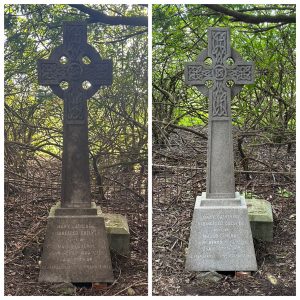
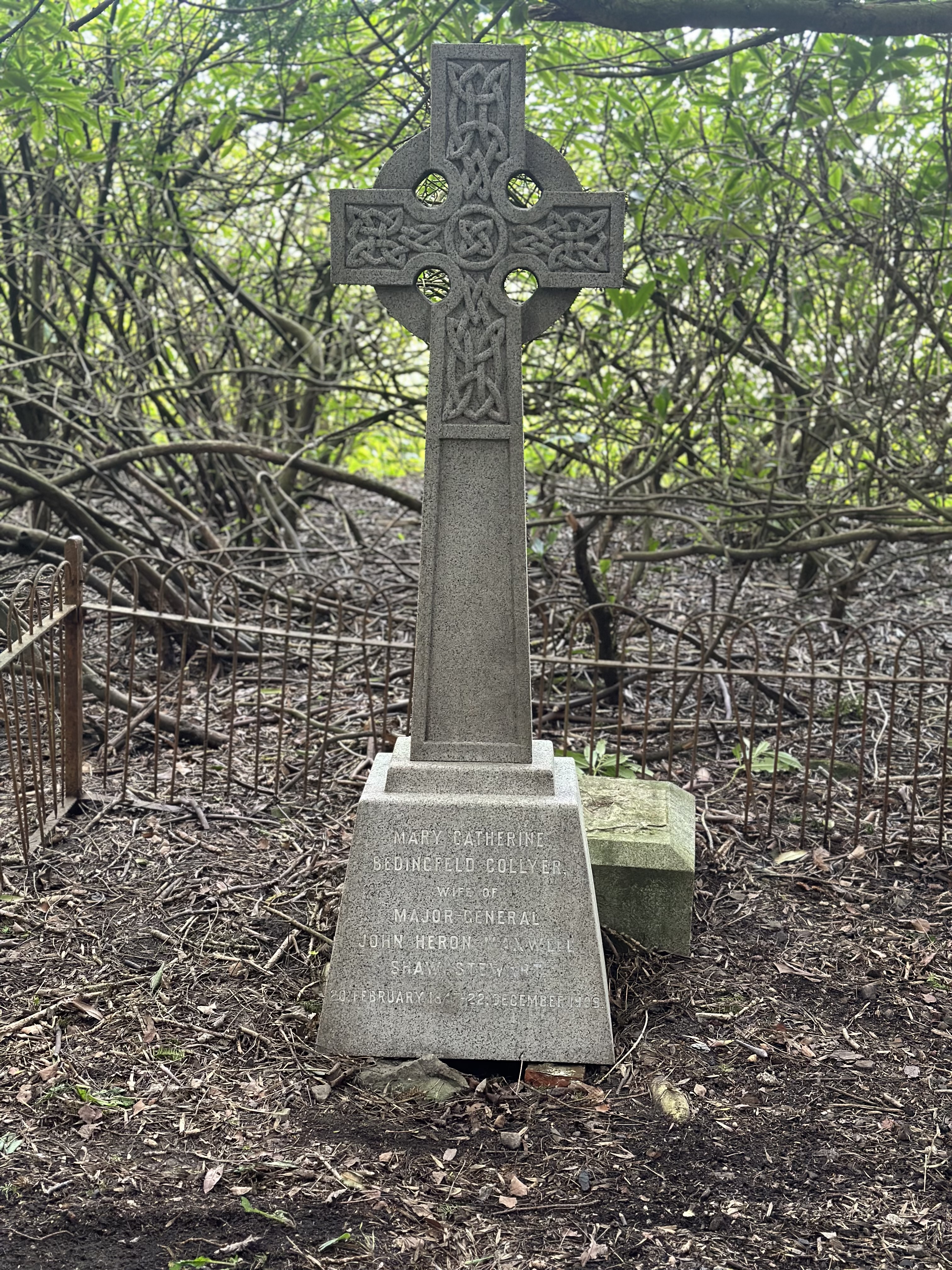
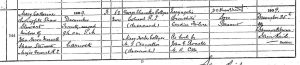
I recently had the opportunity to clean and restore the grave of Mary Catherine Bedingfeld Shaw-Stewart, born Mary Catherine Bedingfeld Collyer in Edinburgh in 1847. The significant sum she inherited from her father, Colonel George Chancellor Collyer, in 1894 — £13,663, about £1.5 million in today’s money — underscored the substantial social standing her family maintained.

You can watch me restore this grave and others, by clicking here

Marriage and Maternal Life

Mary married Major General John Heron Maxwell Shaw-Stewart on the 7th of September, 1871. The couple’s union, celebrated in an Episcopal ceremony in Edinburgh, signified their established social status and connection to the religious traditions of their community. However, the marriage faced challenges, leading to a separation. This separation was profound enough that their younger son, Patrick, was primarily raised by a nanny—a figure so central to his upbringing that he affectionately referred to her as “dear.” This detail indicates the emotional distance within the family, where parental figures were supplemented or even replaced by household staff.
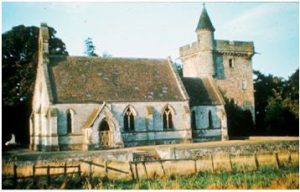
Image Credit, Falkirk History Society“Image Credit: Falkirk History Society”

“Image Credit: Falkirk History Society


The Children’s Contributions and Legacies

Patrick Houston Shaw-Stewart, one of Mary’s children, became noted as a war poet, whose works captured the horror and futility of World War One and won him the Croix de Guerre of France. His most famous poem, “Achilles in the Trench,” reads in full:

“I saw a man this morning
Who did not wish to die;
I ask, and cannot answer,
If otherwise wish I.

Fair broke the day this morning
Upon the Dardanelles;
The breeze blew soft, the morn’s cheeks
Were cold as cold sea-shells.

But other shells are waiting
Across the Aegean Sea;
Shrapnel and high explosives,
Shells and hells for me.

Oh Hell of ships and cities,
Hell of men like me,
Fatal second Helen,
Why must I follow thee?

Achilles came to Troyland
And I to Chersonese;
He turned from wrath to battle,
And I from three days’ peace.

Was it so hard, Achilles,
So very hard to die?
Thou knowest and I know not;
So much the happier am I.

I will go back this morning
From Imbros o’er the sea.
Stand in the trench, Achilles,
Flame-capped, and shout for me.”


Katherine Bedingfeld Shaw-Stewart, another of Mary’s children, received an MBE in 1943 for her contributions during World War Two, indicating the family’s ongoing legacy of service.

Mary’s Final Days and Burial

Mary died three days before Christmas in 1909. She passed away in Carnock House, the residence of her husband’s family, and her death was registered by her son, on Christmas day at the registrars office in nearby Bannockburn. Her grave now lies beside the ruins of an Episcopal church, a once-prestigious burial site for aristocrats and servants alike, now a poignant symbol of historical decay.
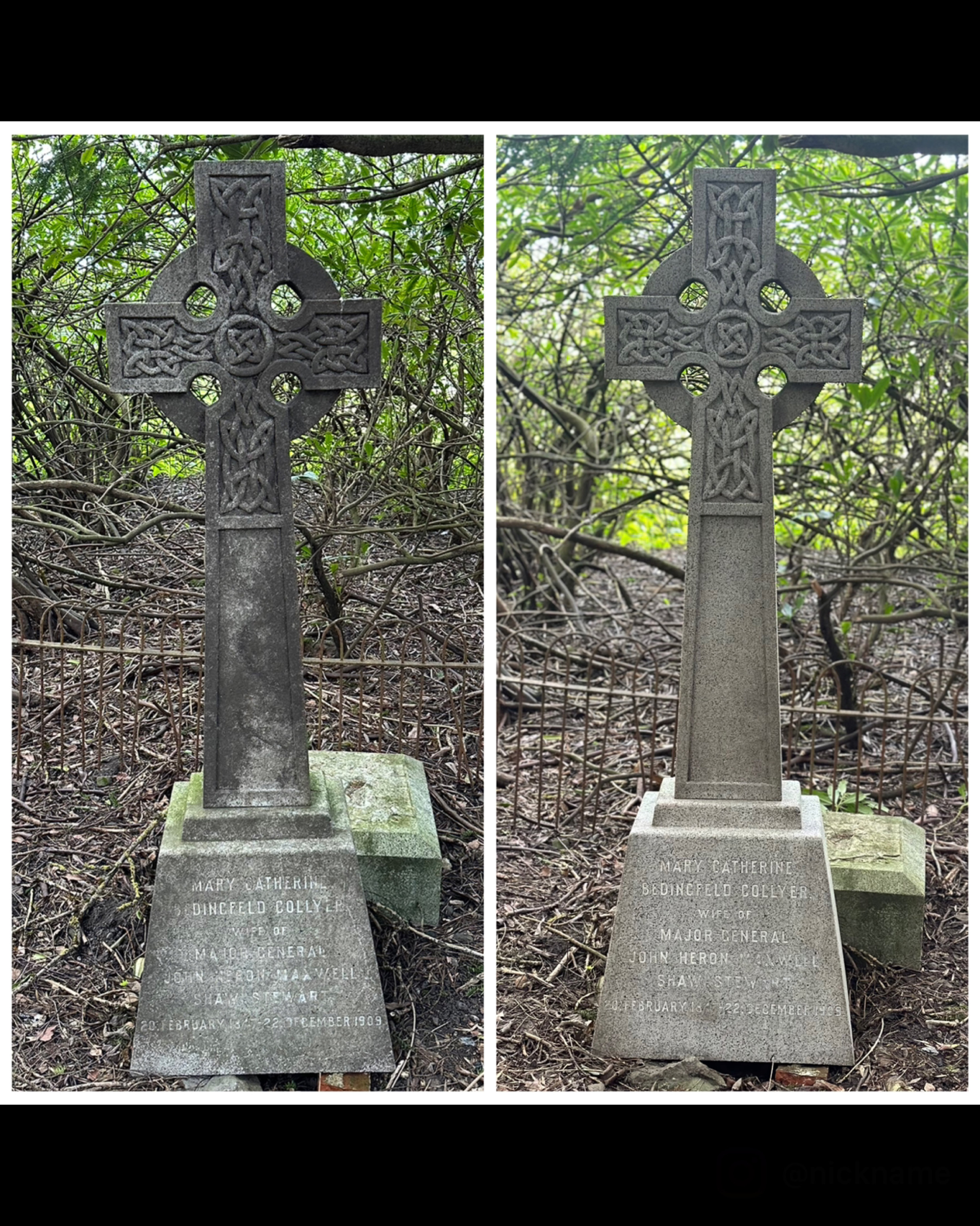
“Image Credit: National records of Scotland

Our Commitment

At “A Different Ending,” we are dedicated to uncovering and preserving such stories, ensuring that the personal histories and broader cultural narratives they represent are not forgotten but continue to inspire and educate. Mary Catherine Bedingfeld Shaw-Stewart’s life, marked by personal challenges, social change, and familial legacy, enriches our understanding of her era and reminds us of the complex narratives woven through the history of Victorian and Edwardian Britain.

Monuments of Memory: Connecting Past and Future Through Restoration and New Ways of Remembering
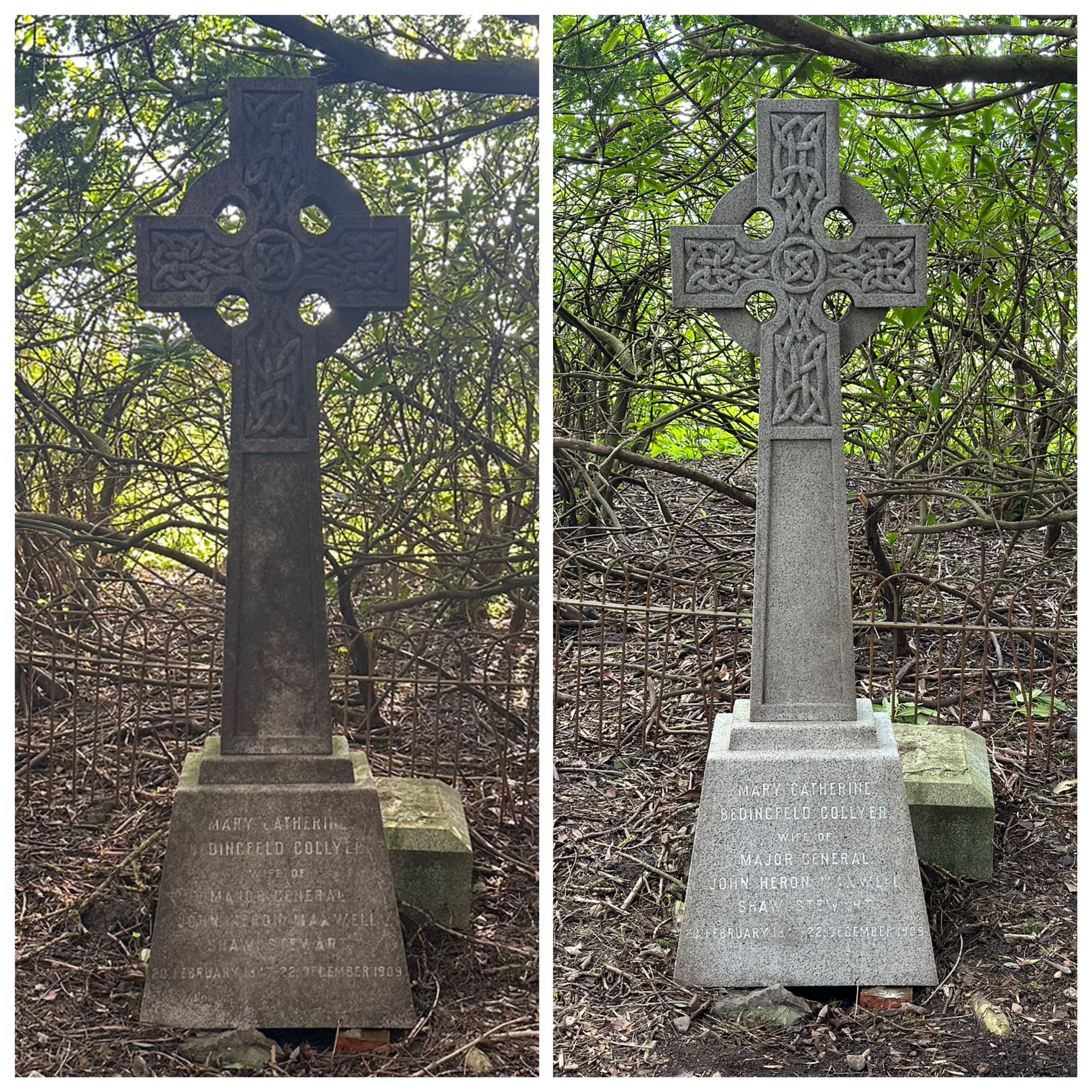
As a Time-Served Stonemason, I’m deeply moved by the stories that emerge with each restoration. The tale of Mary Catherine Bedingfeld Shaw-Stewart reminds us that every grave has a story worth telling, rich with personal and historical significance.

Restoring Mary’s grave is not just about preserving stone, but about bringing history and memories back to life. It’s a privilege to reconnect these silent testimonies of the past with today’s world, ensuring that the dignity and stories of those who came before us are remembered and celebrated.

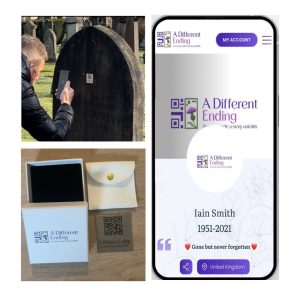
In addition to restoration, we’re innovating the way we remember our loved ones. Through our QR code business, you can now purchase a memorial page for your loved one. This modern approach ensures that their stories and legacies are accessible and preserved for generations to come, offering a new way to honour and remember.

Please follow us on our social media platforms to stay updated with more stories like Mary’s and to learn more about our QR code memorial pages. Every person’s story deserves to be told, and we have many more tales to share. Join us in preserving our shared heritage—one stone at a time.

To purchase a memorial page for your loved one click here

Remember to watch the video of me cleaning this grave by clicking here

A Different Ending


Forbes Mausoleum

Forbes Mausoleum,

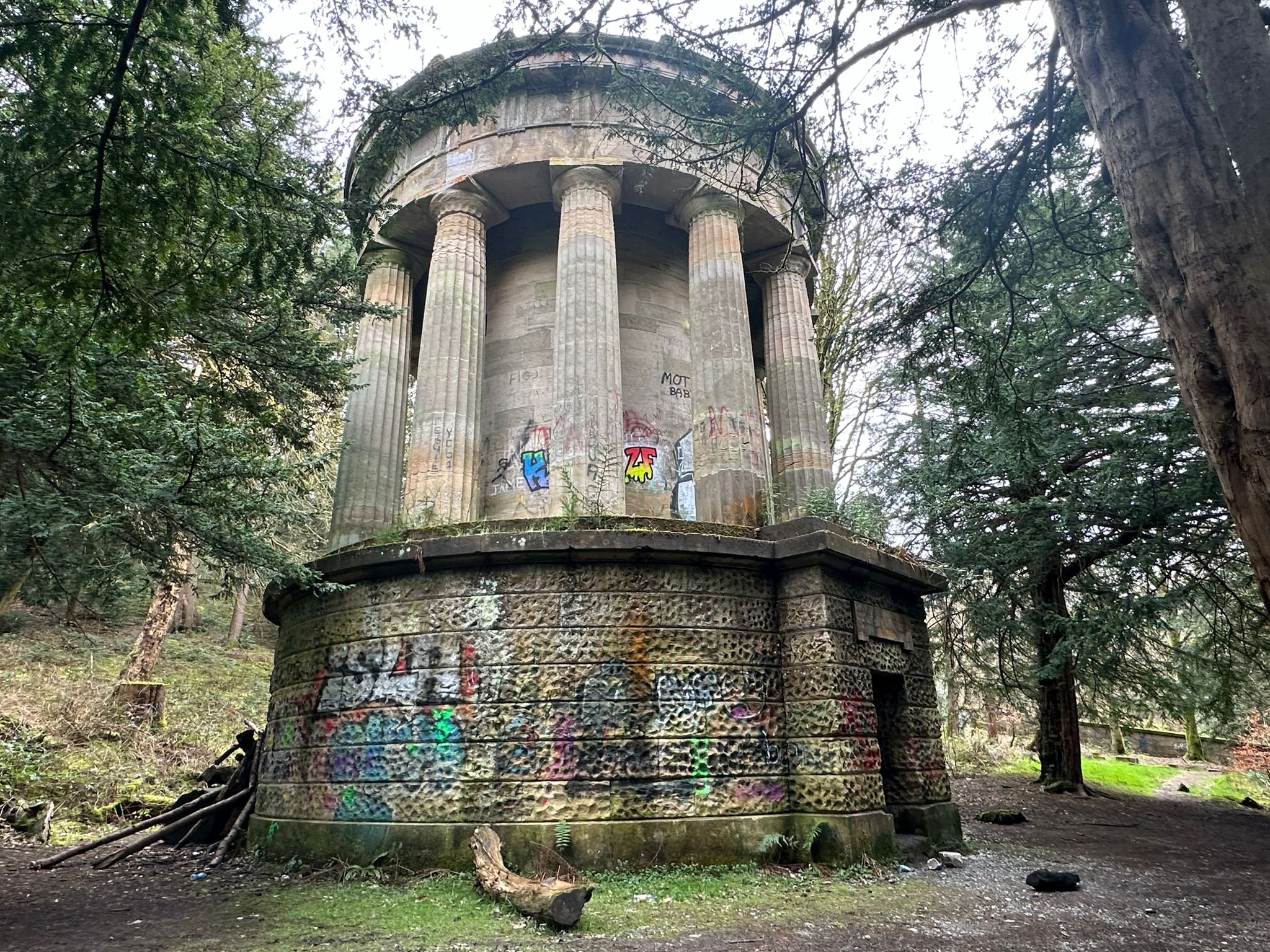
This abandoned mausoleum from 1815 sits deep within the forest surrounding Callendar House in Falkirk.

Exploring the Hidden History of Callendar House Estate: The Forgotten Forbes Mausoleum

Nestled within the sprawling grounds of Callendar House Estate, a 14th-century French chateau, lies a forgotten relic steeped in history—the Forbes Mausoleum. While the estate is a popular destination for joggers and dog-walkers, few are aware of the abandoned mausoleum concealed within the forest’s depths.

Dating back to 1816, the Forbes Mausoleum stands as a circular, Classical monument honouring the memory of William Forbes I. Designed by the renowned architect Archibald Elliot, its twelve fluted columns emerge majestically from a podium, silently bearing witness to the passage of time.

It stands as a testament to the expertise of stonemasons of the time. Their intricate craftsmanship is evident in every aspect, highlighting the timeless allure of hand-carved stonework


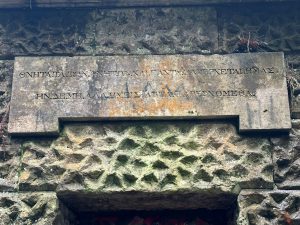
Above the doorway, an inscription from a Greek poem serves as a poignant reminder of the transient nature of life:

“All things we mortals call our own
Are mortal too and quickly flown;
But could they all forever stay,
We soon from them must pass away.”


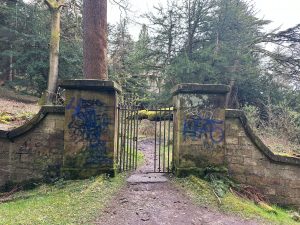
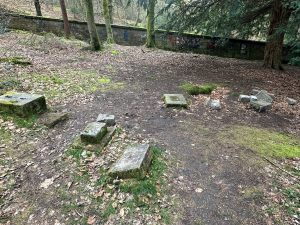
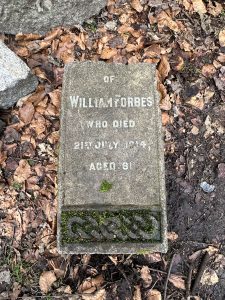
Surrounding the mausoleum lies a cemetery where several members of the Forbes family and estate workers rest in eternal slumber. Sadly, the ravages of time and neglect have taken their toll, with headstones broken or obscured by encroaching vegetation.

Walking northwest from the mausoleum, you will see the scattered remnants of these forgotten graves, each bearing silent testimony to lives once lived and now lost to the passage of time.


Sealed shut and abandoned for years, the Forbes Mausoleum now stands as a canvas for colourful graffiti, slowly succumbing to the relentless embrace of nature. Yet, amidst the decay and neglect, it remains a poignant reminder of the estate’s storied past and the enduring legacy of those who once called it home.

The occupants of the Mausoleum include:

  • 1816    William Forbes (I)
  • 1845    Lady Louisa Antoinette Forbes
  • 1855    William Forbes (II)
  • 1866    Rose O’Hara
  • 1902    Captain Henry Dudley Forbes
  • 1906    youngest son of Charles Forbes
  • 1914    William Forbes (III)
  • 1951    Jean Forbes
  • 1977 William Dudley Forbes

Each was buried according to Episcopalian rites.

Falkirk Local History Society 2021

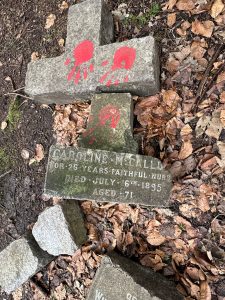
In 1964, estate servants’ grave monuments were relocated near the mausoleum before building the college of education. Now frequented by the public, the enclosure suffers from vandalism and graffiti. In 1993, the mausoleum’s metal door was replaced with a concrete barrier. Tragically, the stones commemorating the servants have been completely shattered.


As a time-served stonemason, witnessing the defacement of these historic monuments by graffiti and vandalism is deeply disheartening, a betrayal of the reverence and care with which they were originally crafted. It’s a constant battle between the desire to preserve and protect these monuments and the frustration of seeing them desecrated.


Capture memories that last a lifetime. Discover the power of our memorial QR codes and create a lasting tribute for your loved ones. Honour their legacy with a simple scan. Click here to find out more


A Different Ending